Blog

Coaching canvassers without Commit-To-Vote forms

 You get what you praise for. Finding praiseworthy actions is the key to improving your canvassers effectiveness. Anything that can be interpreted as criticism will discourage volunteers from returning and is less likely to lead to a more effective canvass. Praising actions will lead to positive actions displacing negative ones. Commit-To-Vote forms make it easy to find ways to praise your canvassers. In this post, we will discuss how to find actions to praise in the walk lists themselves. This can be useful for canvassers who brought back only a couple (or zero) Commit-To-Vote forms as well as in canvasses that do not involve Commit-To-Vote forms at all. As always, I focus on canvassing to identify Democrats and motivate them to vote.

 You get what you praise for. Hence if you simply count how many 1s (aka strong support for your candidate) you find on the walk lists, you may inadvertently encourage canvassers to mark all voters at a household as a 1 even if they haven’t spoken to them. Instead consider focusing first on a household where the voters are not all marked identically on the walk list. Consider saying: “At this household you made different notations for each voter. I like to see that. Do you remember how that conversation went?” Even if that was simply a mistake on their part, you have made your point without seeming to criticize them.

 If at most (or even all) households all voters are marked identically, consider asking them to count each household as just one contact. Something like: “Where there are multiple voters at a household, could you count that as just one contact unless you are quite sure that you spoke to more than one of the voters on the list?” Tone of voice here is everything. If you can’t make this sound like you are asking them to do a special favor for you (and hence not criticism), don’t do it.

  If on a given walk list, only one or two households have support information about more than one voter, that suggests that something different happened at those households. I would still ask first about a household where the voters are not all marked identically on the walk list, as mentioned above. This reinforces the value that you place on treating voters individually. Then pivot to one where more than one voter (preferably just two voters) is marked as being a supporter and ask about that household. Delay your praise until you know what happened. If they say that they talked to both voters, praise that. If they say that Jane told them that John would support your candidate, try: “Terrific, we are pleased to have John’s support. And next time you don’t need to record that because we try to respect each individual’s independence by recording only what they tell us themselves.” If they say that they just assumed that John would support us because Jane does. Try: “That makes sense. He probably will. And next time don’t need to record that … “  

  After a given volunteer is consistently recording information only about the voters from whom they have heard directly, you can start to talk to them about the value of talking to multiple voters at the same household. You can do this by focusing on any household where they have clearly spoken to more than one voter. If they never mark more than one voter, they probably aren’t asking to speak to more than one voter. Consider: “Wow you are doing a great job here. I like that you are recording information only about the voters to whom you have spoken. Would you be interested in my thoughts on how to speak to more than one voter at a household?”

  This post assumes that this canvass is focused primarily on identifying supporters. If your campaign is focused on other aspects, please adjust accordingly. It also assumes that you want canvassers to mark as supporters only voters to whom the canvasser has spoken directly. This may not be the case for all campaigns.

 In any case, keep it positive and remember that you get what you praise for.  

Walk list used in the Parnell Special Election June 2017

Coaching canvassers on a Commit-To-Vote canvass

 A friend who coached my daughter’s soccer team after having previously played and coached basketball, lamented that as a soccer coach you get much less contact with your players than a basketball coach does. Imagine how he would feel if he were not allowed within a mile of the game and had only his players’ descriptions of the action on which to base his coaching.

 And yet that is how you, the field organizer, must coach canvassers. You don’t get to see the interaction at the door. In a typical reflection, you are more likely to hear about a dog or some other obstacle than about an actual interaction.

  Excellent canvassers can be three to five times more effective and you can help them get there.

Discussion

  After canvassers have signed-in, ask them what has worked for them. This can be done in a group or individually. This helps them remember what they learned from their most recent canvass, focuses them on the positive and gives you a sense of what their skill and experience level is. Praise any practice that you hope that they will continue. [Refer to Winning your campaign’s first Commit-To-Vote canvass for thoughts on helping volunteers who have never attended a Commit-To-Vote canvass.]

  Ask each canvasser if they would like an idea or two for how to be more effective this time. Telling them that despite all the doors that you have knocked you continue to think about how to improve every time you canvass (which I sincerely hope that you do), will help them see canvassing as the learnable, coachable skill that it is.

  You now have license to make some suggestions. If they collected one or two Commit-To-Vote cards in their most recent canvass, help them feel more comfortable with the ask. As they grow comfortable, encourage them to use a more confident ask, such as: “Are you prepared to make a commitment to vote for Jane Doe in this election?” I tell canvassers  “It is all in the wrist” as I show how I put the Commit-To-Vote card in front of the voter with a flick of the wrist and a pleasant “Here you go.”

  If they collected three or more Commit-To-Vote cards in a recent canvass but those Commit-To-Vote cards are coming back without phone numbers, you could ask if they would feel comfortable asking for phone numbers this time. “Could I get your phone number?” works surprisingly well.

If they collected three or more Commit-To-Vote cards with phone numbers recently, it may be time for them to look for ways to talk to more voters. Asking to talk to the second or third voter on their list at a given household is a great way to bring home more completed Commit-To-Vote cards. I also watch the cars. If one pulls into a house that I have just been to, I double back and re-knock that door. If I am quick enough, I might even catch them coming back to the car to bring in the last of the groceries.

  After you have mentioned a couple techniques, ask if there is one of those that they would like to focus on today. If it is something that they can practice now, say: “Great, I would like to see you practice that once before you go so that you will be ready when it comes up.”

Role Play

  Have each canvasser tell their role play partner what they want to focus on today. [ Ask me for my six favorite techniques for getting volunteers to participate in the role play.]

Pairing canvassers

 If possible, pair novice canvassers with a canvasser who has a solid track record collecting Commit-To-Vote cards. Seek to avoid pairing an experienced canvasser who has never collected Commit-To-Vote cards with a less experienced canvasser, even one who has collected Commit-To-Vote cards. If this pairing happens anyway, suggest that the experienced canvasser open the conversation while the less experienced canvasser focuses on collecting Commit-To-Vote cards.

Reflection

This is where the Commit-To-Vote cards show their real strength. Look through the Commit-To-Vote cards with the canvasser as they come in the door. Be excited. Count then. Count how many have phone numbers. Praise those numbers. If the handwriting is legible, praise that. If not, ask pleasantly if they can help you with the handwriting. Pick a specific Commit-To-Vote card (or let them do so) and ask about the conversation that led to this Commit-To-Vote card.

If they did not come back with any completed Commit-To-Vote cards, ignore that. Thank them and praise them for anything that they did – just as you would for a canvass that did not include Commit-To-Vote cards.

Commit-To-Vote chart

Put a chart showing how many Commit-To-Vote cards each volunteer has collected on the wall. Let stickers of one color represent Commit-To-Vote cards without a phone number while another color represents Commit-To-Vote cards with a phone number. Not only does this motivate volunteers, a glance at the chart tells you whether you are talking to a novice volunteer or one who has demonstrated success in collecting Commit-To-Vote cards.

Vote tripling

Though I have no experience with Vote Triplers myself, I remain intrigued. I could imagine a day when I replace all occurrences of Commit-To-Vote cards with Vote Triplers in this post.

Winning your campaign’s first Commit-To-Vote canvass

As a field organizer, you know that you need to recruit at least twice as many canvassers as you expect to show up; you know the critical importance of reminder calls; you know that volunteers should sign-in and pick up their packets; but you also know that sending canvassers out onto the streets is not enough. In this post, I focus on how you can make those volunteers succeed in bringing back Commit-To-Vote cards .

Recruit volunteers to a Commit-To-Vote canvass

As you recruit volunteers to your first Commit-To-Vote canvass, explain that they will be using a new, more powerful, technique: the Commit-To-Vote card. This lets them know what to expect and gives them the opportunity to ask about Commit-To-Vote cards when time is not as critical.

Use a script that puts the ask first

No matter how clear the script, novice canvassers will learn only the first one or two lines. If those lines includes the ask, the ask will happen. If not, it won’t. This sample script puts the ask in the second line, the first line being required to identify the voter.

 “I am a volunteer for Jane Doe, Democratic candidate for Congress. May I speak to Richard Roe?”

 “You know how important it is to elect Democrats who will (insert key campaign line). I am here to ask if you are prepared to make a commitment to vote for Democrat Jane Doe on Nov 7th?”

  Getting straight to the point respects the voter’s time while keeping the volunteer on target. If the voter isn’t sold on your candidate before the volunteer knocks, they won’t sign a Commit-To-Vote. Still, the volunteer can have a discussion with the voter, listen to their concerns, and talk about how those concerns will be addressed effectively by your candidate.

Greet volunteers as they arrive

 After volunteers sign in, ask them about their past experience canvassing. Show them the Commit-To-Vote card and ask if they have ever had a voter fill one out. Many volunteers will say: “No. We always took their word for it.” “Great” you say “It is terrific that you have been asking voters to make a commitment to vote. Research shows that when voters make a written commitment to vote, they are even more likely to follow through. Are you ready to learn how to be more effective?”

Role play

Novice canvassers are powerfully aided by role play. Everyone is happy to have practiced their pitch but everyone squirms when asked to demonstrate. Explaining how to coax volunteers to participate in role play is outside the scope of this post. Send me your e-mail address or twitter handle in the comments and I will send you my six favorite techniques for getting volunteers to participate in the role play.

Now that volunteers have practiced their lines, be positive. Find something to like. Did they ask the voter if they were willing to make a commitment to vote?  Praise that. Did they ask to speak to the voter on their list by name? Praise. Were they friendly? Praise. You want to increase their confidence. I would offer them advice in only one situation. If they aren’t asking voters to make a commitment to vote, say that you like what you saw and add: “And today we are going to ask voters to make a written commitment to vote. Could I ask you to try that again, just like you did and add ‘Are you prepared to make a commitment to vote?”

The role plays may cause you to cringe. That’s OK. Praise them anyway. Be glad that you had them do a role play. Their first door knock will go so much better as a result.

Reflection – never waste an opportunity to praise

When they return, look through their Commit-To-Vote cards and find something to praise. If they are all in the same handwriting, the canvasser filled them out. That’s OK. But if at least one voter filled out their own Commit-To-Vote, that is better. Congratulate them on having voters fill the cards out themselves and ask how they convinced this voter to do so. If they collected at least one phone number, praise them and ask how they collected that phone number. Was the phone number legible, praise that too. If they returned with at least one Commit-To-Vote, praise them and ask them about that interaction. Any volunteer who collects at least one Commit-To-Vote their first time will soon be a solid canvasser.

Lavishing praise on canvassers might seem artificial but it is easy to forget how awkward cold door-knocking makes a person feel, especially in these days of maximal screen-time. A volunteer who spends three hours walking the streets and brings back a few cards might feel useless and thus never return. Such feelings can be effectively dispelled by even a little praise.

What is more, asking volunteers about the good results that they achieved will help you learn new techniques. More importantly it reinforces those techniques in the canvasser’s mind. Often the canvasser will say: “I don’t know, they just did it.” That’s great. This helps the canvasser understand that voters want to commit to vote for your candidate and that keeping the pitch simple and giving them the opportunity is often enough.

Keep it positive. If they did not collect any Commit-To-Vote forms, thank them for canvassing.

Set yourself up for success

Focus on canvassers who are willing to ask voters to fill out Commit-To-Vote forms. All novice canvassers will agree to do so. Some experienced canvassers will not.

On a Commit to Vote canvass, all voters on the list should be Democrats or lean Democratic. Volunteers who have never collected a Commit-To-Vote will quit asking if the first three voters that they ask turn them down. Nine of ten canvassers knocking on the doors of solid Democrats and lean Democrats will collect at least one Commit-To-Vote from the first three voters they asked and will continue asking voters to fill out Commit-To-Vote forms. If half of the voters on the list are independents, four or five of those ten canvassers will come back without a single Commit-To-Vote. Those volunteers who came home empty handed will sour on Commit-To-Vote canvassing.

Avoid sending novice volunteers to “No Soliciting” neighborhoods. Experienced, dedicated canvassers can handle those. Few, if any, novices will. Likewise, going after independent voters requires alternative canvassing methods. Ask for my thoughts on either of these topics, if interested.

Pilot your canvass. Take a list and knock on doors for a couple hours a week or so before your first Commit-To-Vote canvass. This will allow you to speak from experience.

Final thoughts

Note to the field campaign manager and regional field managers. Asking novice field organizers to manage their first Commit-To-Vote canvass risks setting them up for failure. Consider having a seasoned organizer, one who has demonstrated success launching a first Commit-To-Vote canvass help.

If you have been running Commit-To-Vote canvasses with mediocre results (fewer than ⅔ of canvassers returning with completed Commit-To-Vote cards) your task is more difficult, but still possible. Ask me about rejuvenating mediocre Commit-To-Vote canvasses, if interested.

Vote triplers might soon replace the Commit-To-Vote card as the best way to increase voter turnout. I can’t speak from personal experience, but I have heard good things about this from people who have used them. I look forward to trying them when the opportunity arises.

Why ask with a question?


Two decades ago I ran across this article. I refer to it every time I seek to convince a volunteer to ask with a question “Can we count on you to vote for Barack Obama?” instead of asking with a statement: “Please vote for Barack Obama.” I told people that a restaurant owner had found that switching to asking with a question cut their no show rate in half. I have thought many times about trying to find this article. I never did, in part because I was afraid that I was exaggerating the effect. Did they really say that it cut their no show rate in half? No it did not. It was better than that. It said that it cut their no show rate by two-thirds. The interesting paragraph is buried, so here it is:

He instructed his receptionists to stop saying, ”Please call us if you change your plans,” and start saying, ”Will you call us if you change your plans?” His no-show rate dropped from 30 percent to 10 percent. In other words, by asking a question and eliciting a response, he created a sense of obligation.

PS I like the idea of asking voters for their credit card information and telling them that they can avoid the $300 no-show charge simply by voting. [JK]


Oberlin Votes doubled the Democratic margin

Ken improves grass roots politics.

Dr. Stanley pioneered a friend-to-friend campaign – a revolutionary new way to approach voter participation drives.

When this method was used in Oberlin, Ohio in 2004, it increased voter participation by 60%, from 3,536 in 2000 to 5,270, and nearly doubled the margin for the Democratic candidates from 2,092 to 4,010.

Our efforts resulted in a 60% increase in voter participation between 2000 to 2004.


Relational organizing

Twelve years ago, the Obama campaign switched to a computer driven approach that maximized door knocks and phone calls at the expense of personal connections.

Volunteers never spoke to the same voter twice.

Everyone was impressed with the computerized system, including Ken.

But Ken saw a simple way to add even more value. He realized that adding strong personal connections to the computerized system would yield even more votes.

Today’s campaigns continue to use the same formula pioneered in 2008, and they still work. Ken makes campaigns dramatically more effective by nurturing personal relationships between organizers, volunteers and voters.


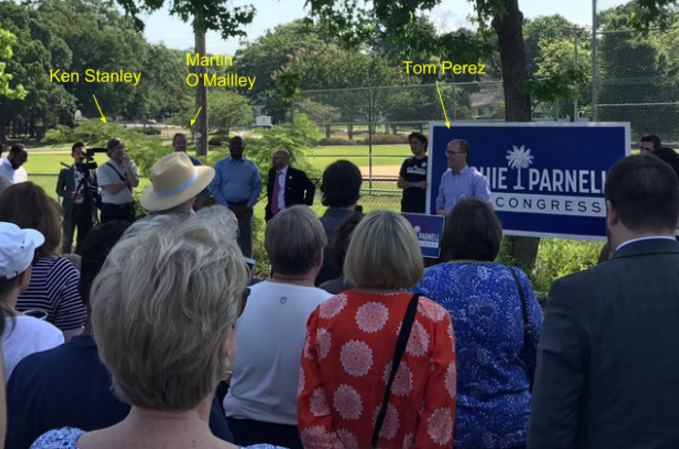
StanleyOMalleyPerez

Having a Voter Database is Not Enough.

Vote builder is a great place to start. It allows the campaign instant access to the numeric results (doors knocked, phone calls made, voters contacted, etc). When we add personal connections and improved volunteer training, we dramatically improve results.

Quality of contacts is as important as quantity. A friend-to-friend contact, be it from one volunteer to another or from a volunteer to a voter, is dramatically more effective than an anonymous contact.

When you don’t speak with the same voter twice, you lose that connection.

You become impersonal, and it doesn’t just affect voters, it affects campaign staff and volunteers. Volunteer recruitment and reminder calls are similarly depersonalized.

Having volunteers is Not Enough.

Quality of volunteer effort is likewise important. One pair of novice canvassers may jointly knock on 20 doors and speak to 4 voters without bringing home a single completed commit-to-vote card.  A single star volunteer might knock on 80 doors, speak to 30 voters and come home with 25 completed commit-to-vote cards.

A novice canvasser cannot be transformed into a star volunteer in an afternoon,  but, every volunteer can be made more effective every time they canvass.

We can train volunteers to be strategic, smart and most of all, effective.

Furthermore, making volunteers effective is the best way to keep them motivated and engaged. The effect at the polls is dramatic.

Real on-the-ground experience counts now more than ever.